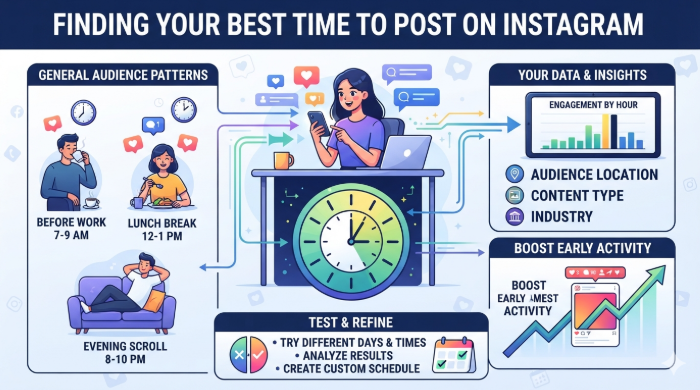
Finding the best time to post on Instagram can help your content reach more people. However, there is no single hour that works for every account. Your audience, location, industry, and content type can all change your results. Instagram users also follow different daily routines. Some people check Instagram before work. Others scroll during lunch or late at night. That is why timing should be based on both general patterns and your own data. A good posting schedule can improve early likes, comments, shares, and saves. Strong early activity can also help your content gain more attention. This guide explains practical posting times for different days and audiences. You will also learn how to use Instagram Insights. Most importantly, you will learn how to test different times. This approach helps you find a schedule that fits your followers instead of copying another creator.
What Is the Best Time to Post on Instagram?
The best time to post on Instagram usually depends on when your followers are active. Many accounts see good engagement during morning, lunch, and evening periods. Weekday activity can be strong because people often check social media during breaks. However, your audience may behave differently. A fitness page may perform well early in the morning. A food page may get attention around lunch or dinner. A student-focused page may see stronger activity later in the day. The goal is not to find one magical posting hour. Instead, you should identify periods when your audience is most likely to see and interact with your content. Start with common engagement windows, then compare them with your Instagram Insights. Over time, your own account data becomes more useful than general timing advice. Consistent testing can help you build a reliable posting routine.
Best Instagram Posting Times by Day
Your ideal posting time can change from Monday to Sunday. This happens because people have different routines throughout the week. Monday mornings may be busy with work and school. Friday evenings can become more social and relaxed. Weekend behavior can also vary greatly between audiences. The table below provides useful starting points for testing. These are not guaranteed results for every account. Use them as testing windows rather than fixed rules. Post similar types of content at different times. Then compare reach, likes, comments, shares, saves, and profile visits. This gives you a clearer picture of audience behavior. You can later adjust your schedule based on your strongest results.
| Day | Suggested Posting Window | Good Content Types | Testing Tip |
| Monday | 11 AM–1 PM | Tips, reels, educational posts | Test lunch activity |
| Tuesday | 9 AM–12 PM | Carousels, reels, guides | Compare morning hours |
| Wednesday | 11 AM–2 PM | Videos, educational content | Watch engagement closely |
| Thursday | 11 AM–1 PM | Reels, product posts | Test midday activity |
| Friday | 10 AM–1 PM | Reels, entertainment, offers | Compare afternoon results |
| Saturday | 9 AM–12 PM | Lifestyle, reels, photos | Test relaxed morning hours |
| Sunday | 10 AM–12 PM | Stories, reels, inspirational posts | Test late morning activity |
Best Time to Post on Instagram in the Morning
Morning can be an effective period for reaching people before their daily schedules become busy. Many users check social media after waking up or during their commute. Businesses can also benefit from reaching customers before work begins. However, morning performance depends heavily on your audience. A professional audience may be active earlier than college students. Parents may check their phones after getting children ready for school. For this reason, you should test several morning slots instead of choosing one hour. Try posting around 8 AM, 9 AM, and 10 AM on different days. Keep the content quality similar during your tests. Then compare the results inside Instagram Insights. If one period consistently produces better reach and engagement, make it part of your regular schedule. Morning posting can work especially well for educational content, quick tips, news updates, and short reels.
Best Time to Post on Instagram at Night
Evening hours can be valuable because many people have finished work, school, and daily tasks. Users may have more free time to watch reels, read captions, and interact with posts. Entertainment, lifestyle, fashion, gaming, and food content can perform well during these hours. However, posting too late may reduce your initial audience. If most followers go to sleep early, your content may miss an important activity window. Start testing evening periods between 6 PM and 9 PM. Compare different days because audience habits can change during weekends. Also remember that Instagram content can continue gaining views after publication. Therefore, timing is important, but it is not the only factor. Strong hooks, useful information, good visuals, and engaging captions still matter. Use timing as one part of a broader Instagram content strategy.
Best Time to Post on Instagram for Reels
Reels can reach people beyond your current followers. This makes timing useful when you want strong early activity. A Reel posted when your followers are active may receive faster initial engagement. That can give the content a stronger start. Still, Reel performance depends on many factors. Watch time, retention, shares, audio, topic relevance, and the opening hook can all matter. Test Reels during morning, afternoon, and evening windows. Keep your topics reasonably similar during each test. This makes your comparison more meaningful. If a Reel receives strong watch time but low engagement, improve the call to action. If people leave quickly, improve the first few seconds. Timing alone cannot fix weak content. The strongest results usually come from combining good timing with useful and entertaining videos. Review your results regularly and update your posting schedule.
Best Time to Post on Instagram for Stories
Instagram Stories are different from regular posts and Reels. Stories can work well throughout the day because they disappear after 24 hours. You can use several updates to reach followers during different activity periods. Morning Stories can introduce the day’s topic. Afternoon Stories can share tips, polls, or product information. Evening Stories can encourage replies and conversations. Instead of posting everything at one time, consider spreading your Stories across the day. This gives followers multiple chances to interact with your account. Interactive features can also make Stories more useful. Try polls, questions, quizzes, sliders, and direct prompts. Watch which time periods produce the most replies and views. Your audience data can reveal useful patterns that general social media studies cannot show. A flexible Story schedule can therefore support your wider Instagram marketing plan.
How to Find Your Personal Instagram Posting Time
The easiest way to improve your schedule is to study your own audience. Instagram Insights provides information about your followers and content performance. Depending on your account type and available features, you can review audience activity and post results. Look for periods when your followers are most active. Then compare those periods with your highest-performing posts. Do not focus only on likes. Reach, shares, saves, comments, profile visits, and follows can provide deeper information. For example, a post with fewer likes may generate more website visits. That post could be more valuable for a business. Create a simple testing plan for several weeks. Record the date, time, content type, reach, and engagement. After collecting enough results, look for repeated patterns. This turns posting time into a data-based decision rather than a guess.
Does Time Zone Affect Instagram Posting?
Time zones are extremely important for accounts with international audiences. Your followers may live in several different countries. A posting time that works in Pakistan may not work for followers in the United States. You should therefore identify where most of your audience lives. Instagram Insights can help you understand your audience location when the relevant data is available. Once you know the major locations, choose posting windows that match their active periods. You may also create different schedules for different audience groups. For example, a global brand could publish important content more than once. Another option is to schedule posts around the largest audience segment. Always consider the audience you want to reach most. Local businesses should usually prioritize local time. International creators may need a more flexible schedule. Time zone planning can prevent good content from being published while most followers are asleep.
Best Time to Post on Instagram for Businesses
Businesses should think beyond simple engagement numbers. The right posting time should support the business goal. A restaurant may want people to see posts before lunch or dinner. An online store may prefer periods when customers are browsing products. A service company may target users during working hours. B2B businesses often need a different strategy from entertainment pages. Start by identifying when your customers are available and ready to act. Then test content around those periods. Include clear calls to action when appropriate. Ask users to visit your website, send a message, save a guide, or learn more. Track actions that matter to your business. A post with fewer likes can still be highly successful if it creates sales or leads. The right schedule should therefore connect audience activity with your actual business goals.
How Often Should You Post on Instagram?
Posting time matters, but consistency matters too. Publishing regularly helps your audience know when to expect content. It also gives you more opportunities to learn what works. However, posting too frequently can become difficult to maintain. It may also reduce content quality if you rush every post. Choose a schedule you can follow consistently. For some creators, several posts each week may be enough. Others may focus more heavily on Reels and Stories. Your ideal frequency depends on your resources, audience, and content strategy. Avoid posting simply because you think you must fill a schedule. Each post should provide value. Educational content should teach something useful. Entertainment should create interest or emotion. Product content should help people make decisions. A consistent and useful content calendar can be more effective than random daily posting.
Does the Instagram Algorithm Care About Posting Time?
Posting time can influence early engagement, but it is not the only ranking factor. Instagram content can continue reaching users after it is published. The platform considers many signals when deciding what users may want to see. These can include interactions, relevance, viewing behavior, and content performance. Therefore, choosing a good posting time should not replace creating strong content. Instead, think of timing as a way to give your post a better starting opportunity. A useful Reel can continue gaining views long after publication. A valuable carousel can generate saves for days. A strong Story can encourage direct conversations. Focus first on your audience and content quality. Then use timing to improve your chances of reaching active followers. This balanced approach is more sustainable than chasing a perfect hour every day.
Common Instagram Posting Mistakes to Avoid
Many creators make timing decisions based on assumptions. One common mistake is copying a large influencer’s schedule. That creator may have a completely different audience. Another mistake is posting at one time without testing alternatives. Audience behavior can change over time. Holidays, seasons, work schedules, and trends can also affect activity. Some creators also focus only on likes. Likes are useful, but they do not tell the whole story. Shares and saves can be especially valuable for useful content. Another mistake is changing too many variables at once. If you change the topic, format, caption, and posting time together, comparisons become difficult. Test one major factor at a time when possible. Keep notes about your results. Small improvements can eventually create a much stronger Instagram strategy.
A Simple Testing Strategy for Better Results
You can build your own posting schedule with a simple experiment. Choose three different posting windows. For example, test morning, midday, and evening periods. Publish similar content types during each window. Continue the test for several weeks. Record important metrics after each post. Include reach, engagement, shares, saves, comments, and profile actions. Do not judge a time from one post alone. A single post may perform unusually well because of its topic. Look for patterns across several posts. After your test, identify your strongest time windows. Then repeat the experiment occasionally. Audience behavior can change as your account grows. New followers may live in different locations. Their habits may also differ from your older audience. Regular testing keeps your strategy current. This method helps you discover a posting schedule based on evidence rather than internet guesses.
Best Time to Post on Instagram: Quick Reference
The best time to post on Instagram should be treated as a starting point rather than a permanent rule. General recommendations can help when you have little account data. Once your account has enough activity, your own audience insights become more valuable. Start by testing morning, midday, and evening windows. Compare results across weekdays and weekends. Then adjust your content calendar based on repeated performance. Remember that every audience is different. A local business may have a very different schedule from a global creator. Your content category also affects when people want to engage. The table below summarizes a simple testing approach you can use.
| Goal | Starting Time Window | Recommended Content | Main Metric |
| Morning reach | 8–10 AM | Tips and short posts | Reach |
| Midday engagement | 11 AM–2 PM | Carousels and Reels | Comments |
| Evening engagement | 6–9 PM | Reels and lifestyle posts | Shares |
| Product promotion | 12–2 PM | Product posts | Clicks |
| Story interaction | Morning + evening | Polls and questions | Replies |
| Global audience | Multiple time zones | Reels and carousels | Reach by region |
How to Build Your Instagram Content Calendar
A content calendar makes your posting strategy easier to manage. Start by listing your main content categories. These could include educational posts, Reels, product updates, customer stories, and entertainment. Next, assign each category to a suitable day and testing window. Leave room for timely content and trends. Your calendar should not become so strict that you cannot react to your audience. Review performance at least once each week. Look for content that gets strong reach and meaningful engagement. Then repeat successful ideas with fresh angles. Avoid copying the exact same post repeatedly. You can also repurpose useful ideas into different formats. A carousel can become a Reel. A Reel can become a Story discussion. This approach saves time while keeping your account active. Over time, your calendar becomes a practical system for consistent growth.
FAQs About the Best Time to Post on Instagram
1. What is the best time to post on Instagram?
The best time to post on Instagram varies by audience. Start by testing morning, midday, and evening windows. Then use Instagram Insights to identify when your followers are most active. Your audience location, age group, industry, and daily routine can all affect results. General studies provide useful starting points, but your own data should guide long-term decisions.
2. Is morning or evening better for Instagram?
Both periods can work well. Morning posts may reach people before work or school. Evening posts can reach users after daily activities finish. The better option depends on your audience. Test both periods with similar content. Compare reach, engagement, shares, and saves. After several tests, choose the period that repeatedly produces stronger results.
3. What is the best day to post on Instagram?
There is no universal best day. Weekdays often provide useful engagement opportunities, while weekends can work well for lifestyle content. Your audience may behave differently based on its location and interests. Test several days and track performance. Look for consistent patterns rather than judging your strategy from one successful post.
4. Does posting time affect Instagram reach?
Posting time can affect early visibility because more followers may be active when your content appears. However, it is only one part of Instagram performance. Content quality, relevance, engagement, watch time, and sharing behavior also matter. A strong post can continue gaining attention after publication. Therefore, timing should support good content rather than replace it.
5. How can I see when my Instagram followers are active?
Use Instagram’s available Insights tools to study audience activity. The exact information can vary based on account type and Instagram’s current features. Look for follower activity patterns and compare them with your post performance. Keep records of successful posting times. This will help you understand your audience more clearly and create a smarter schedule.
6. Should I post at the same time every day?
You can use a consistent schedule, but you do not need to use one exact time. Testing different windows can reveal better opportunities. Your audience may also have different habits on weekdays and weekends. Start with a consistent plan, then adjust it using your performance data. Consistency and flexibility can work together successfully.
Conclusion
The best time to post on Instagram is ultimately the time when your specific audience is ready to engage. General time ranges can give you a useful starting point. However, your own Instagram Insights should guide your final schedule. Test different days and time windows. Track meaningful metrics such as reach, shares, saves, comments, and profile visits. Also consider your audience’s location and daily routine. Most importantly, never depend on timing alone. Valuable content, strong visuals, useful captions, and consistent publishing remain essential. Start with a simple testing plan today. Try different posting windows and record your results. After a few weeks, you should have enough information to make smarter decisions. Your goal is not to discover one perfect hour. Your goal is to build a repeatable strategy that helps your content reach the right people at the right moment.